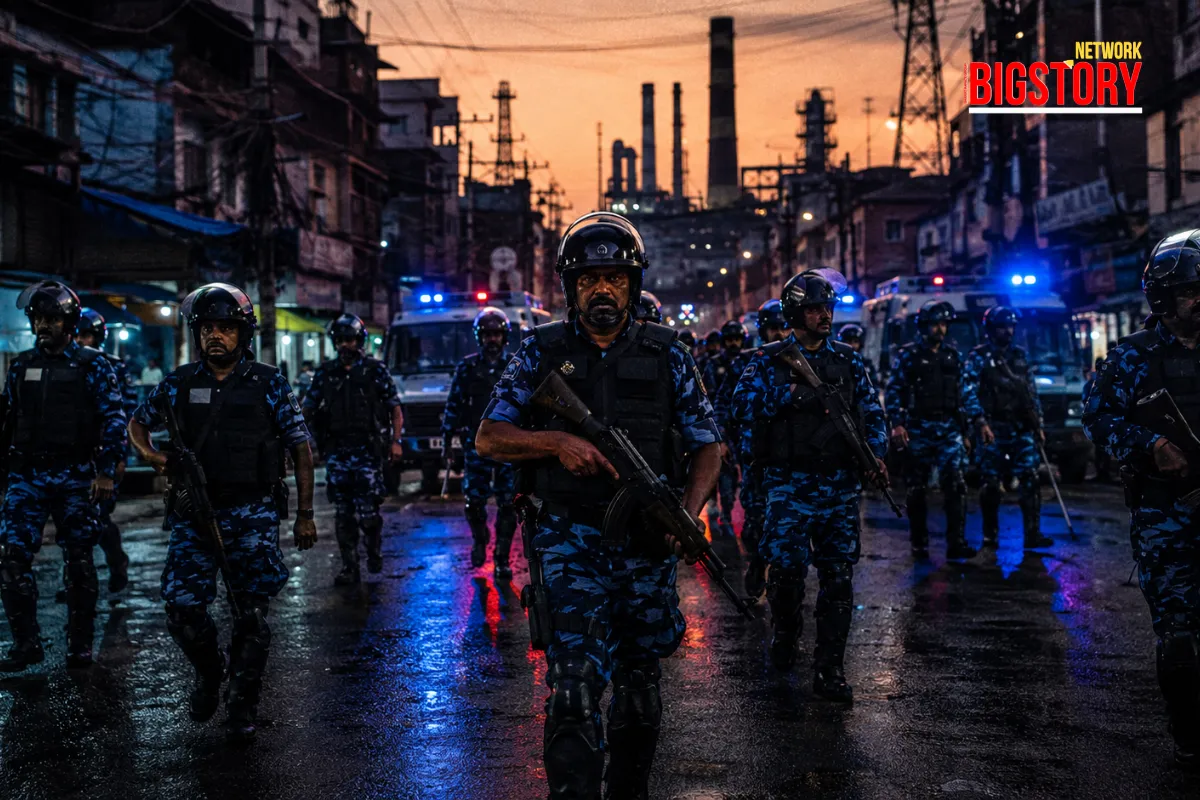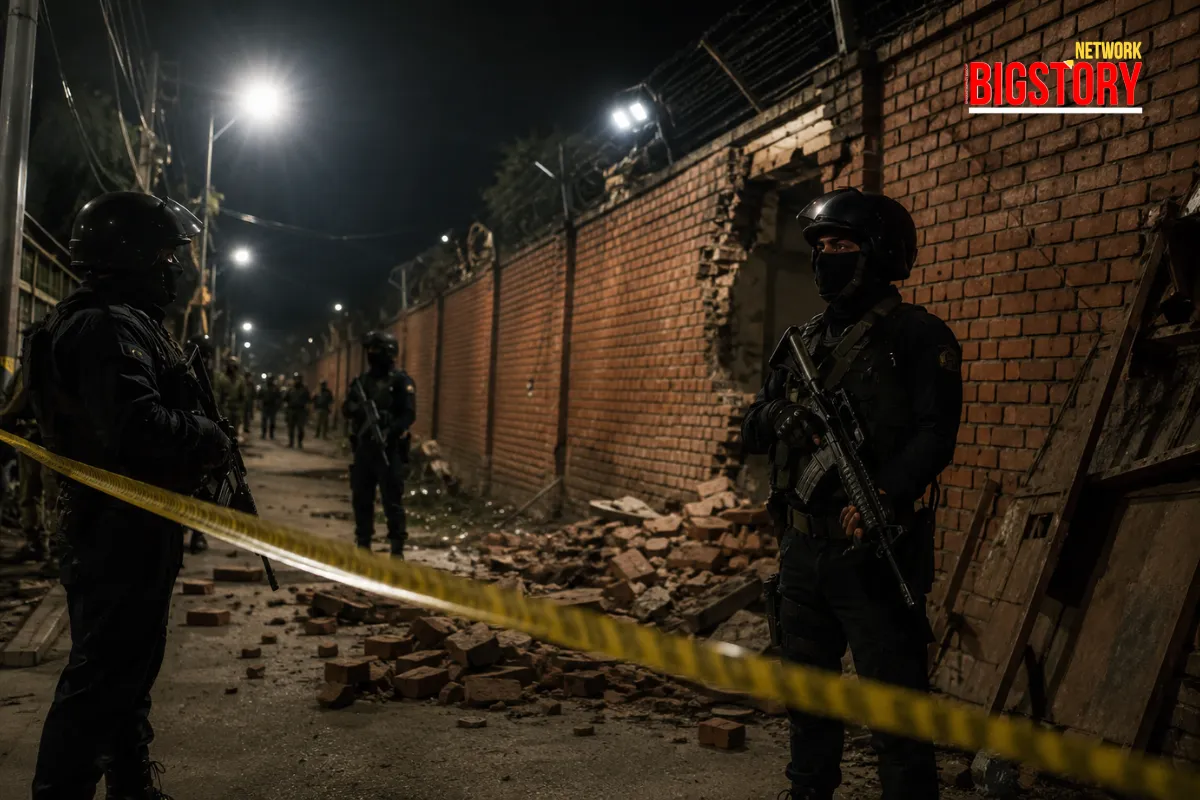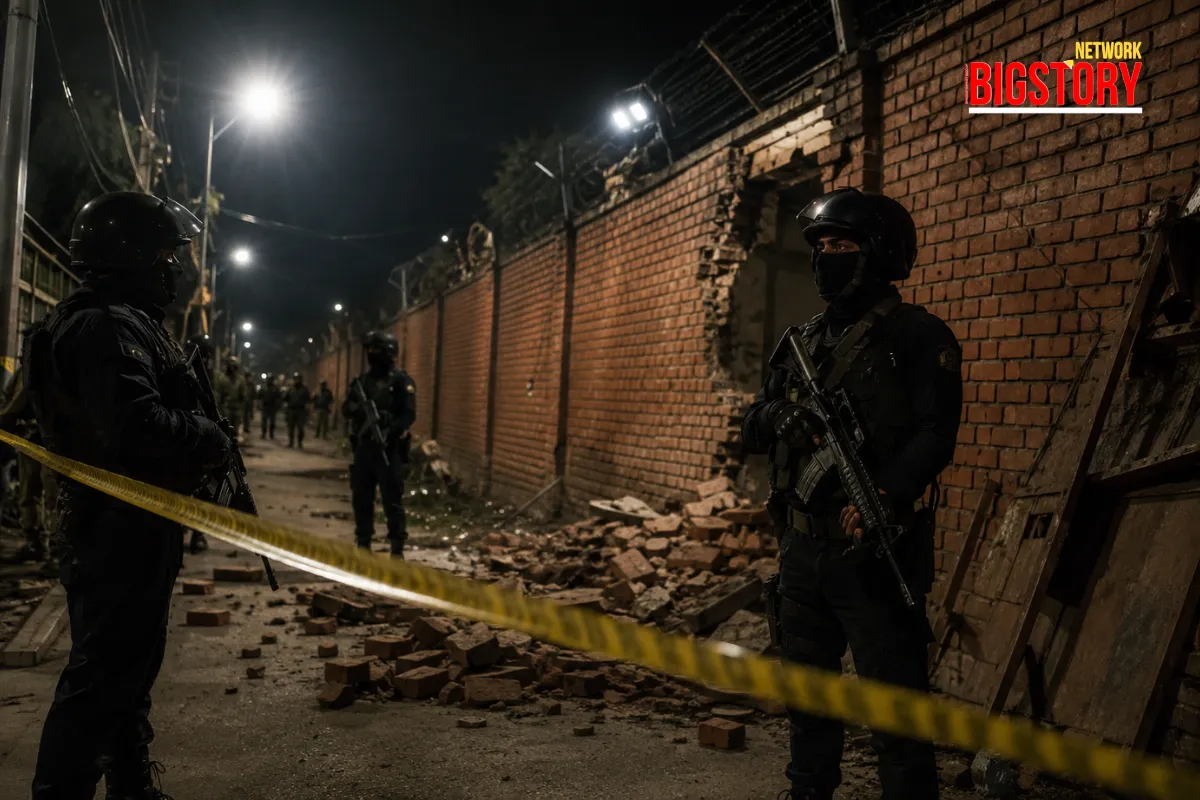
A severe intelligence failure in a critical border state has been rapidly weaponized into an election conspiracy, exposing massive vulnerabilities in India's security grid.
 Brajesh Mishra
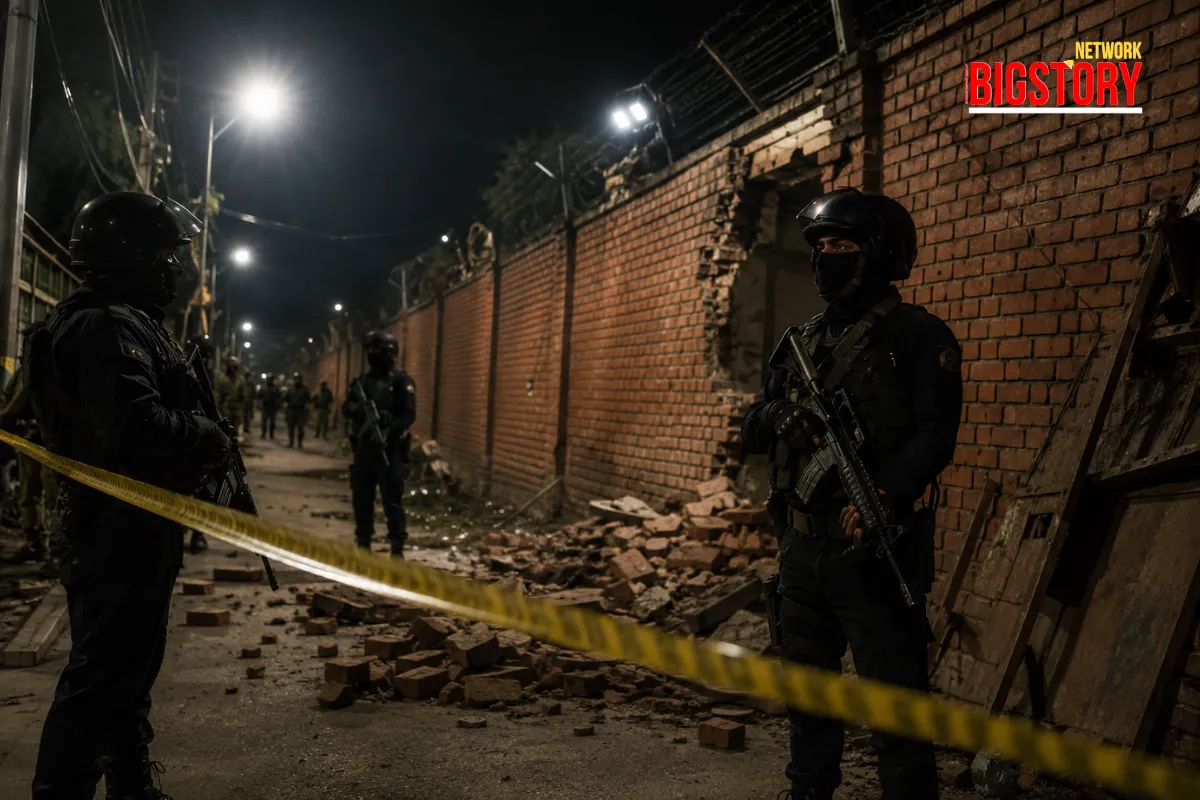
What happened: Two back-to-back explosions struck outside a BSF headquarters in Jalandhar and an Army cantonment in Amritsar on Tuesday night.
Why it happened: Punjab Police suspect the coordinated attacks are part of Pakistan's ISI designs to destabilize the state on the anniversary of "Operation Sindoor."
The strategic play: Instead of launching a unified response, the state government has weaponized the intelligence failure, accusing the BJP of engineering the blasts for electoral polarization.
India's stake: The targeted strikes against military boundaries represent a severe escalation, marking the third terror attack in Punjab within 10 days.
The deciding question: Can central agencies neutralize the active Khalistan Liberation Army modules while the state administration focuses on fighting political rivals instead of hostile actors?
Punjab twin blasts targeted highly sensitive military and Border Security Force installations in Amritsar and Jalandhar within a three-hour window on Tuesday night. The back-to-back explosions shattered a tense calm, scattering debris across civilian zones and triggering an immediate statewide high alert against suspected cross-border terror modules.
This severe escalation marks the third major attack in the border state in just 10 days, following a deadly railway blast in Rajpura. With the National Investigation Agency now sweeping the blast sites, the immediate threat to Punjab's security grid has directly exposed massive vulnerabilities ahead of assembly polls.
• The Trigger: An explosive device was hurled at the Khasa cantonment boundary wall in Amritsar at 10:50 PM, just three hours after a parked scooter exploded outside the BSF headquarters in Jalandhar.
• The Background: The state is currently facing a sharp spike in militant activity, notably the April 27 Rajpura railway track explosion where a suspected bomber died attempting to plant a device.
• The Escalation: The banned Khalistan Liberation Army (KLA) claimed responsibility for the Jalandhar blast, framing the strike as retaliation for a recent police encounter.
• The Stakes: Punjab DGP Gaurav Yadav linked the attacks directly to Pakistan's ISI, specifically noting the disruption aligns with the anniversary of the "Operation Sindoor" doctrine.
Bhagwant Mann, Chief Minister of Punjab Mann has rapidly politicized the security failure, explicitly accusing the BJP of orchestrating the blasts to polarize voters ahead of the assembly elections. His stance effectively shifts the focus from his administration's law and order collapse to a partisan conspiracy.
Gaurav Yadav, Director General of Police, Punjab Yadav pointed the investigation firmly toward cross-border terrorism, implicating the ISI and highlighting the "Operation Sindoor" anniversary as the primary catalyst for the escalating violence.
National Investigation Agency (NIA) The central agency has deployed alongside forensic teams to bypass state-level political interference, aiming to determine the chemical signatures of the explosive devices and trace the KLA sleeper cells.
Mainstream coverage treats these blasts as a standard cross-border terror incident, but the real crisis is the rapid political weaponization of a massive intelligence failure. Instead of projecting a unified security front against hostile actors, Punjab’s political machinery immediately descended into a bitter blame game. Chief Minister Bhagwant Mann explicitly accused the BJP of engineering the explosions as "election preparation" to spread violence. By doing so, he chose to frame a direct strike on military installations as a domestic political conspiracy rather than an act of war.
Simultaneously, the opposition exposed the AAP government's initial attempt to cover up the severity of the threat by deliberately downplaying the Jalandhar scooter blast as an "accidental fire." By turning an active ISI and KLA terror threat into a tool for electoral point-scoring, the Punjab administration is broadcasting a dangerous signal: the state's internal security apparatus is fundamentally fractured, disorganized, and distracted by domestic political survival.
• Vulnerable Borders: The successful targeting of both BSF and Army boundaries proves that local sleeper cells possess the logistical freedom to strike critical military infrastructure at will.
• Federal Intervention: The Union Home Ministry must now decide whether to assert direct control over Punjab's security operations, given the state government's partisan framing of the attacks.
• The Next 7 Days: Watch for aggressive, widespread NIA raids across border districts as central agencies attempt to neutralize the remaining KLA modules before they launch a fourth strike.
• Immediate Governance: State police and central agencies are operating in a highly toxic, polarized environment, which severely complicates intelligence sharing and operational coordination.
• Structural Shift: The coordination between the KLA and the ISI on the "Operation Sindoor" anniversary confirms a renewed effort to leverage local gang networks for strategic terror strikes.
• India-Specific Consequence: If state governments actively blame rival national parties for cross-border terror attacks, the national consensus required for effective counter-terrorism effectively collapses.
If the Punjab government's first instinct after a terror attack on a military base is to blame a rival political party instead of hunting the bombers, how can the border state survive a coordinated ISI offensive?
 Exclusive Content






Sign up for the Daily newsletter to get your biggest stories, handpicked for you each day.



 Trending Now! in last 24hrs